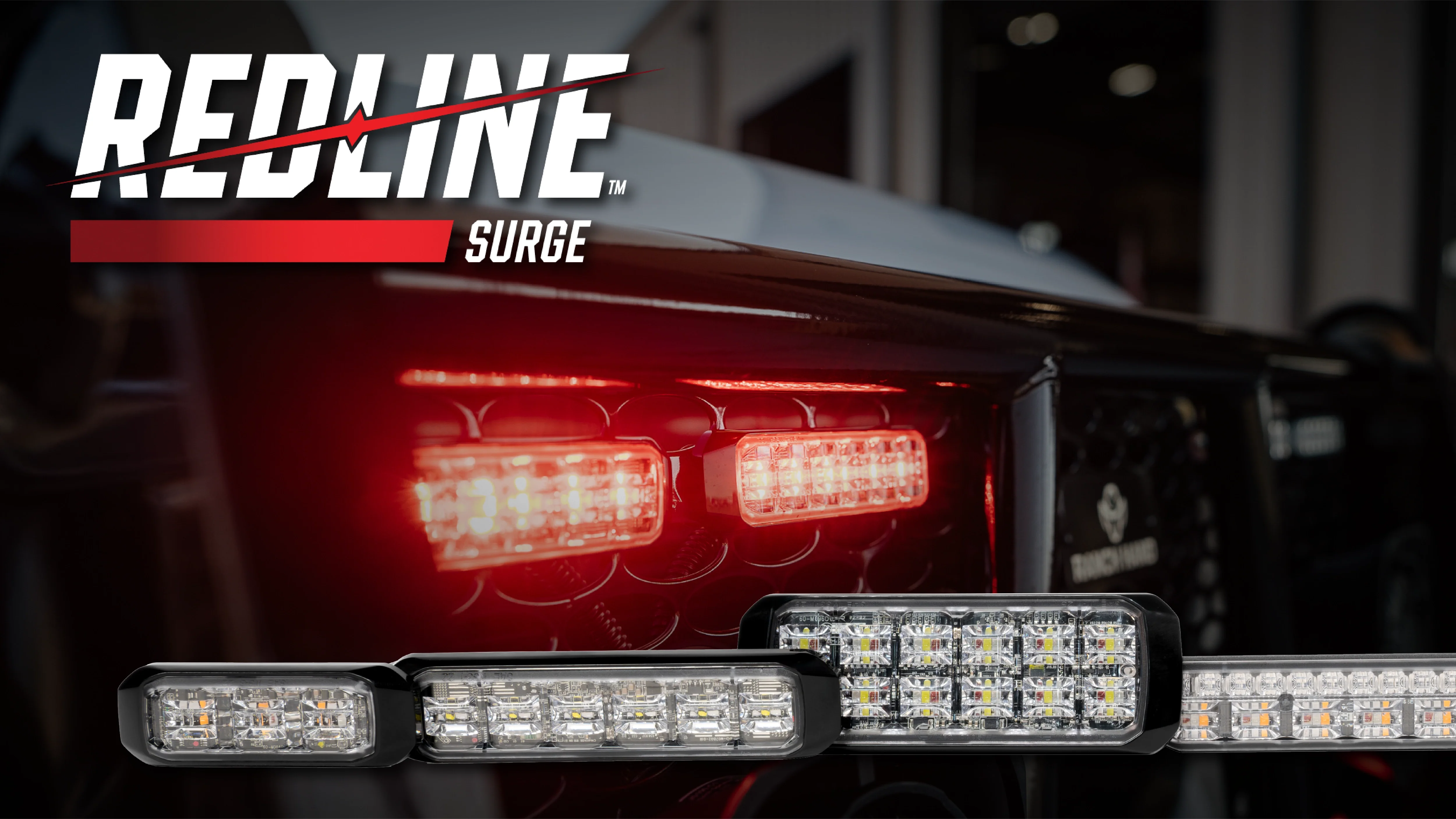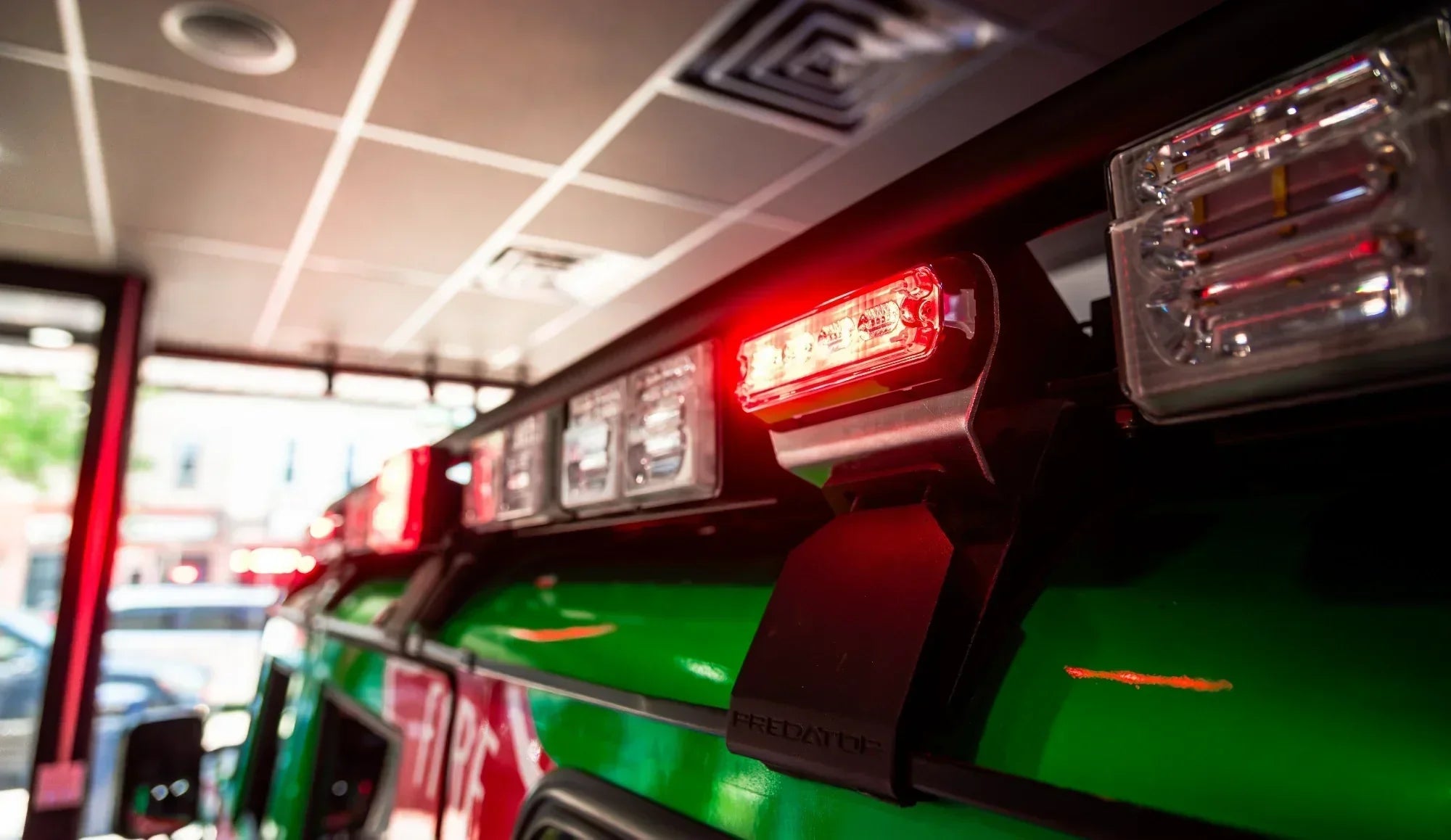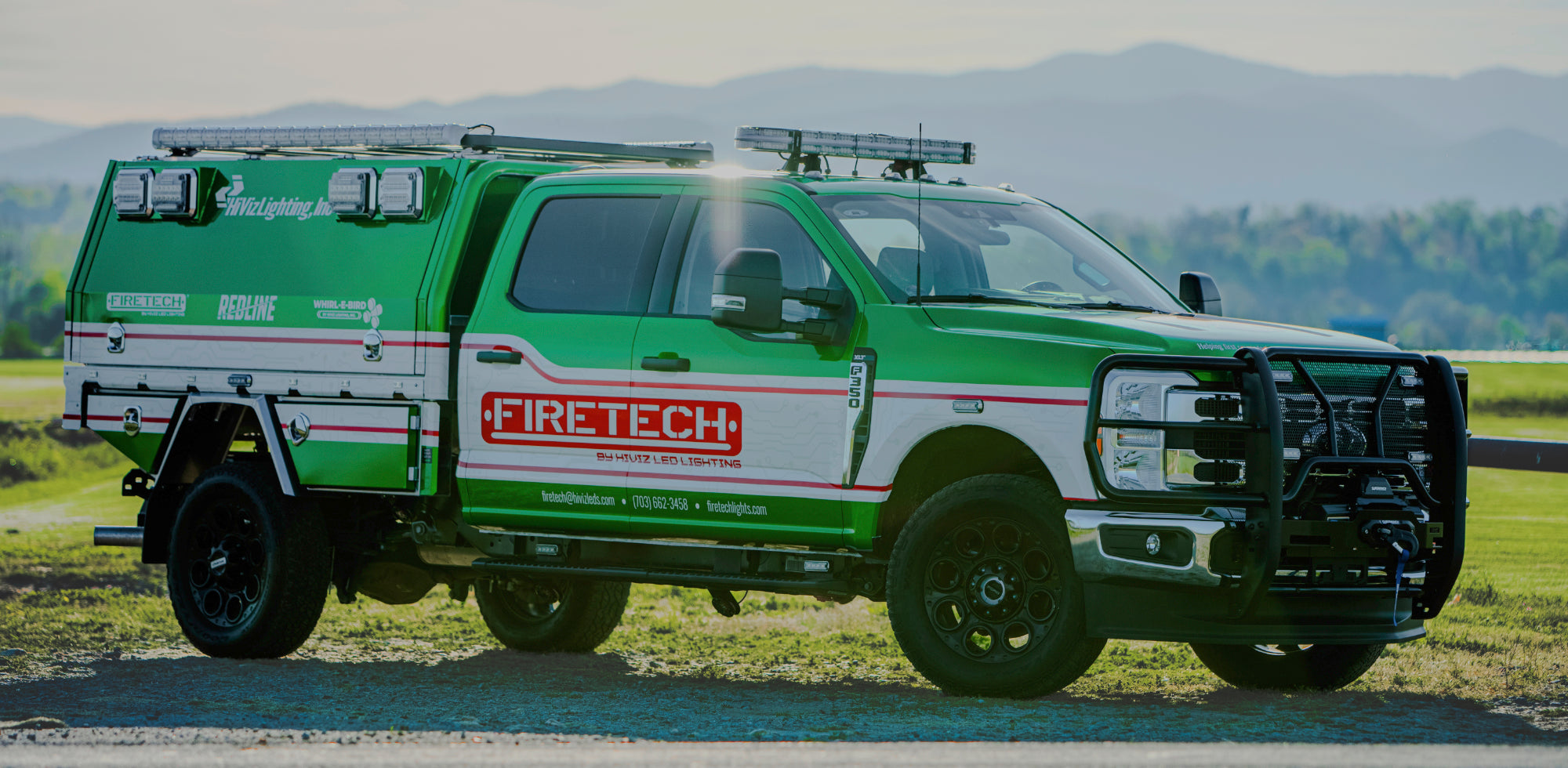

The Redline Instinct is a programmable lightbar with tri-color hardware, previewable flash patterns, automatic dimming, built-in traffic directors, and multiple controller-driven modes.
Most lightbars show up with a fixed personality and expect the truck to adapt. The Redline Instinct works the other way around.
You start with capable tri-color hardware, then use software to define how the bar actually behaves. Color layout, flash patterns, operating modes, traffic-director function, dimming behavior—all of it can be shaped around the vehicle and the job it has to do. That flexibility matters when you’re outfitting everything from a POV to a brush truck to a full-size engine.

Start with the color layout
Instinct is a true tri-color lightbar. A common configuration puts red, blue, and white up front, with red, blue, and amber in the rear. The amber side supports traffic-director work, while the white circuits can be assigned to additional lighting roles.
There’s also a utility-focused version that leans into amber and white, plus rear brake, tail, and turn functions when you need them.
The smart move is locking in the color layout before you order. Decide the front colors, rear colors, traffic-director behavior, and any brake/tail/turn requirements up front. Local rules vary by vehicle type and jurisdiction, so get that confirmation before the bar ships.
Program it. Preview it. Then put it on the truck.
Instinct is programmed through a straightforward PC application. You pick the flash patterns, combine them into the sequences you want, and preview the whole thing on screen before anything gets uploaded to the lightbar.
That preview step is more useful than it sounds. Installers can check the pattern while the bar is still on the bench. Fleet buyers can sign off before the truck is even in the bay. Dealers can walk a customer through options without committing metal. Because the bar is software-defined, programming becomes part of the plan instead of a last-minute scramble.
Automatic dimming that actually works with the rest of the truck
Instinct uses two photocells for redundant light sensing. When ambient light drops, the bar automatically shifts into a dimmed mode for nighttime operation. It can also send a signal to a siren amplifier so other lights on the vehicle dim in coordination.
Depending on how you program it, you get low- and high-intensity modes, ramping, dimming, and flashing behavior that plays nicely with the rest of the lighting package.
Just confirm the details during the upfit plan—wiring path, amplifier connection, and whether you want vehicle-wide dimming. Better to settle it on paper than discover a mismatch after the bar is mounted.
Controllers and steady-burn functions
Instinct is built to talk to siren controllers. The Redline Hot Zone controller communicates directly over CAN, and the bar works with a wide range of other controllers as well.
The white LED circuits can be set up for steady-burn use—takedown lighting or a forward-facing alley light, depending on the configuration and how the controller is wired.
As always, confirm the exact controller, communication method, wiring, and any required accessories for the specific vehicle before you buy.
Built for the vehicles you actually run
The same hardware can be configured for different roles:
- Administrative vehicles that need more than one operating mode
- Personal response vehicles for firefighters and other responders outfitting a POV
- Brush trucks that need both warning and work lighting
- Utility vehicles running amber-and-white with rear signaling
-
Patrol cars that need red, blue, white, and amber arranged around the actual job
These are real application examples, not marketing claims. The configuration still has to match the vehicle, the mounting space, the wiring, and the operating rules.
The Redline Instinct’s real advantage is simple: capable tri-color hardware plus the software to make it behave the way the vehicle needs. Configurable patterns, automatic dimming, traffic-director capability, controller integration, and steady-burn functions give you room to build the bar around the truck instead of forcing every installation into the same fixed setup.